Suno is the most popular AI music generator right now, but it is far from perfect. Credits expire every month whether you use them or not, the free plan locks you out of v5, customer support scores a dismal 1.7 out of 5 on Trustpilot, and the vocal engine starts to sound the same after a dozen generations. If you are searching for a Suno alternative that actually fits the way you work, you are not alone. Here are the best Suno alternatives in 2026 — each one tested and ranked so you can skip the guesswork.
Quick Comparison Table
| Tool | Best For | Starting Price | Free Tier | Commercial Rights | Audio Quality |
|---|---|---|---|---|---|
| MusicWave.ai | All-in-one creation | Free / Paid plans | 10 credits on signup | Yes (paid plans) | 9/10 |
| Udio | Instrumental quality | $10/mo | 10 credits/day + 100/mo | Yes (Pro plan) | 9/10 |
| Soundverse | Ethical AI music | Free / Paid plans | Yes | Yes (with attribution) | 8/10 |
| AIVA | Classical & film scores | Free / €15/mo | 3 downloads/mo | Yes (Pro plan) | 8/10 |
| Boomy | Beginners | Free | Yes | Yes (keeps 80% royalties) | 6/10 |
| Loudly | Content creators | $8/mo (annual) | 25 songs/mo | Yes (paid plans) | 7/10 |
| Mubert | Looping & background | Free / Paid plans | 25 tracks/mo (watermarked) | Yes (paid plans) | 7/10 |
| Musicfy | Voice cloning | $9/mo | Yes (limited) | Yes (paid plans) | 8/10 |
Why People Look for Suno Alternatives
Suno dominates the AI music space, but dominance does not mean satisfaction. Here are the specific pain points pushing users toward competitors.
Credits That Vanish Every Month
Suno's subscription credits do not roll over. If you pay for Pro and only use half your credits, the rest disappear when your billing cycle resets. The only exception is Premier, which lets you roll over up to 2,000 credits. Top-up credits technically do not expire, but they require an active subscription to use — so you are still paying monthly either way.
V5 Locked Behind a Paywall
The free tier only gives you access to older models. If you want Suno's latest and most capable generation engine, you need a Pro or Premier plan. That is a hard sell when competitors like Udio and MusicWave.ai give free users access to competitive quality.
Customer Support Is Nearly Non-Existent
Suno's Trustpilot score sits at 1.7 out of 5 — rated "Bad." The most common complaint across reviews is unanswered support emails. Users report being locked out of accounts, billed after cancellation, and left waiting weeks with no response. For a paid product, that is unacceptable.
Vocal Repetition Gets Old Fast
After generating a few dozen tracks, Suno's vocal output starts to feel formulaic. The same tonal qualities, phrasing patterns, and delivery styles show up across different genres. If you need variety in vocal performance, you will hit a ceiling quickly.
Ongoing Copyright Lawsuits Create Uncertainty
Suno's legal situation is still unresolved. Warner Music settled and signed a licensing deal in late 2025, but Sony Music's case is heading toward a pivotal ruling expected in summer 2026. Meanwhile, GEMA (Germany's music rights organization) has its own lawsuit moving through the courts. Suno's own terms acknowledge they cannot guarantee copyright will vest in your output. If you are building a business around AI-generated music, that ambiguity is a real risk.
The Best Suno Alternatives in 2026
1. MusicWave.ai — Best Overall Alternative
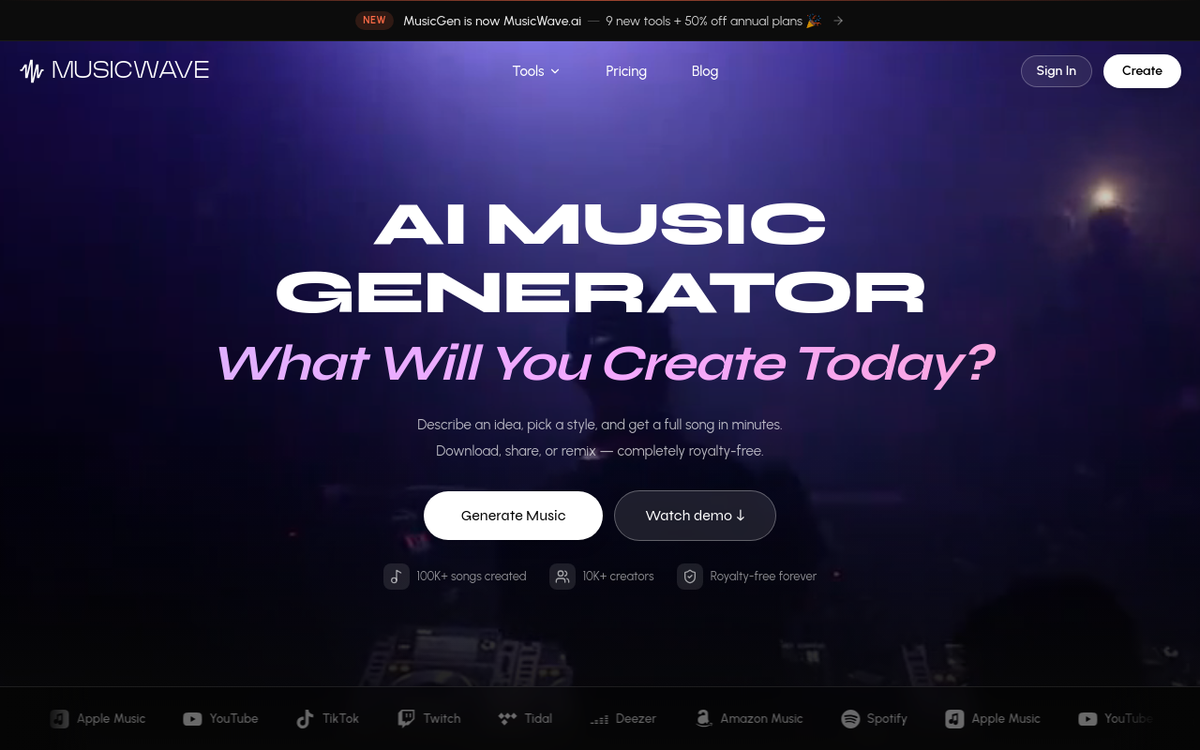
Verdict: The most complete Suno competitor. If you want more than just text-to-song generation, MusicWave.ai is the one to try first.
MusicWave.ai (formerly MusicGen) relaunched in April 2026 with nine new tools packed into a single platform. It is not just an AI music generator — it is an entire creative suite for audio.
What makes it stand out:
The tool set goes well beyond what Suno offers. You get text-to-song generation, an AI stem splitter that isolates vocals, drums, bass, piano, and other instruments, AI cover song creation, an image-to-music generator, a song extender, genre transformation, AI vocal layering, MIDI extraction, and even an AI music video generator. That breadth is unmatched by any single competitor.
Free tier and pricing:
New users get 10 credits on signup with access to the basic AI model. Paid plans unlock better models, more credits, and full commercial rights. The platform is currently running 50% off annual plans, which brings the cost well below Suno's pricing.
Best for:
Creators who want to generate, edit, remix, split, and distribute from one dashboard. The personalized song gift feature is also a unique angle — useful if you are making custom tracks for events, birthdays, or branded content.
Weaknesses:
The platform is newer, so the community and template library are still growing. If you want a massive user base to browse and discover tracks, Suno still has the edge there.
2. Udio — Best for Instrumental Quality
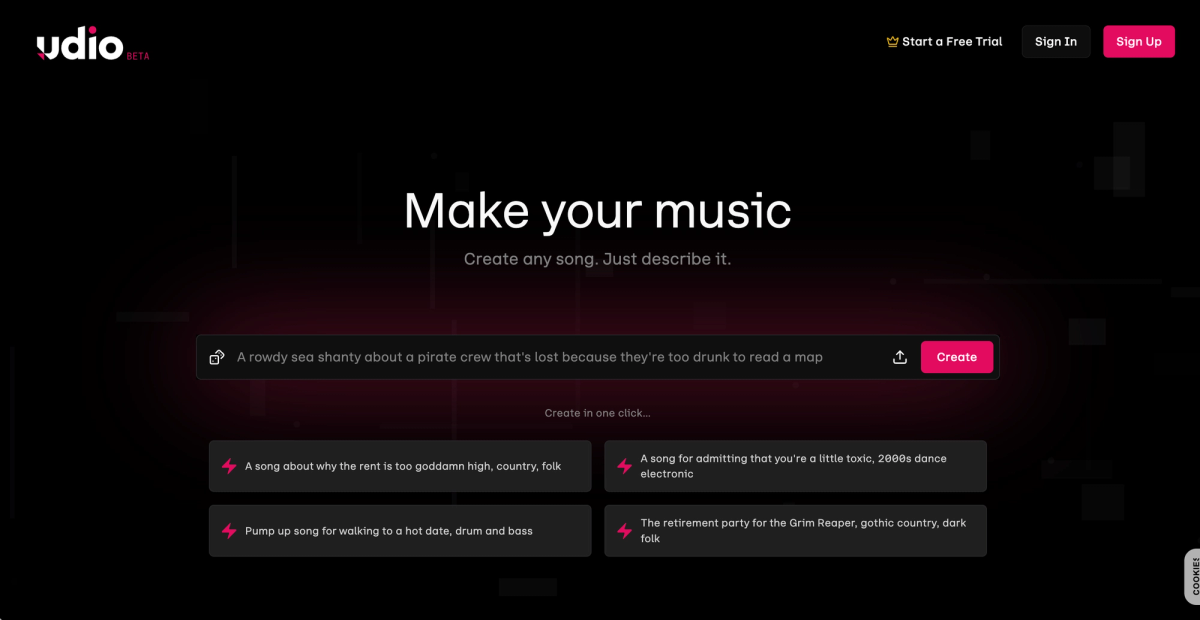
Verdict: The closest direct competitor to Suno, with arguably better instrumental production and cleaner mixes.
Udio has earned a reputation for producing tracks with more natural vocal phrasing and superior instrumental detail. Where Suno's output can sound processed and uniform, Udio tends to deliver cleaner separation between instruments and more dynamic arrangements.
Free tier and pricing:
The free plan gives you 10 credits per day plus a monthly bank of 100 extra credits — enough to test the platform seriously without paying. The Standard plan runs $10/month for 2,400 credits, and the Pro plan costs $30/month for 6,000 credits with commercial rights included.
The UMG deal:
Udio's licensing agreement with Universal Music Group gives it stronger legal footing than most competitors. That deal matters if you are concerned about copyright risk in your AI-generated tracks.
Weaknesses:
Udio temporarily disabled all downloads — audio, video, and stems — during a licensing transition period in 2025-2026. While downloads are expected to return, you should verify the current status before committing to a paid plan. That kind of disruption is not something you would tolerate from a professional tool.
3. Soundverse — Best for Ethical AI Music
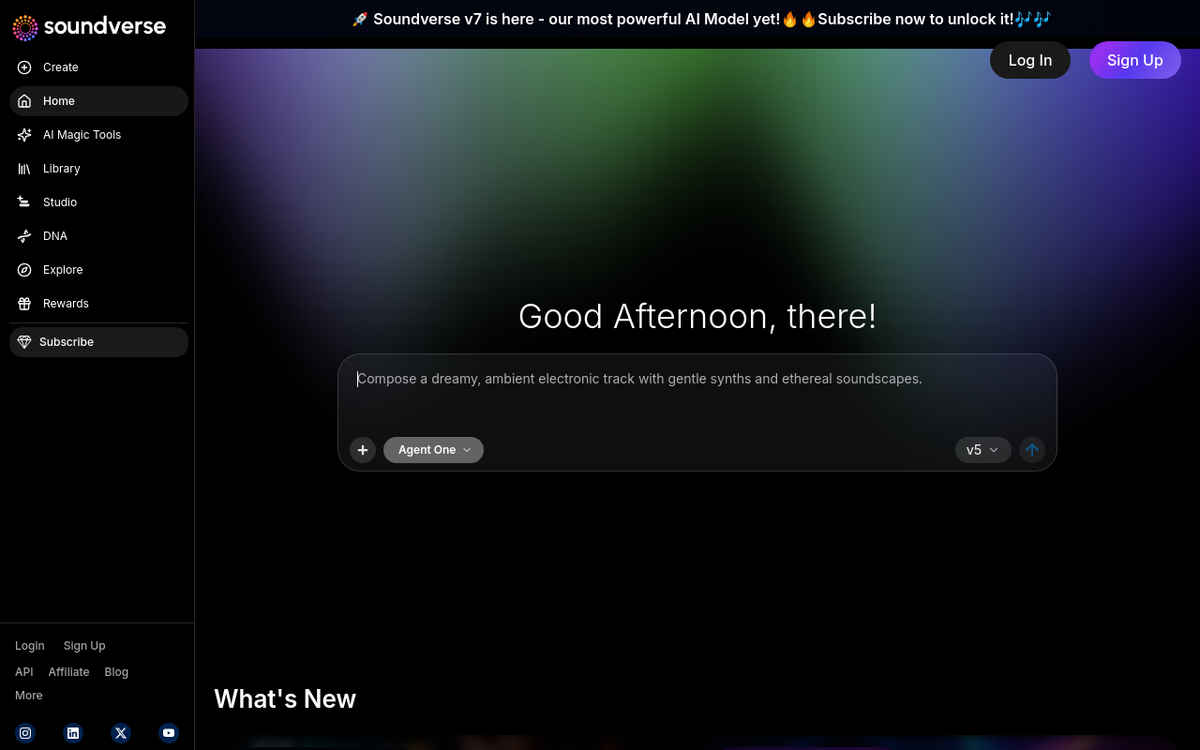
Verdict: The best choice if licensing transparency and artist compensation are non-negotiable for you.
Soundverse has built its entire brand around ethical AI music. Their Soundverse DNA framework means every sample, melody, and voice in their training data comes from properly licensed sources. No scraping, no gray areas.
How the ethics work in practice:
The platform uses a six-stage infrastructure: licensed data sourcing, permissioned models, explainable inference for attribution, traceable export through watermarking, and recurring compensation through their Content Partner Program. Artists can license their catalog for AI training and receive transparent attribution plus royalties.
Features:
Text-to-music generation, stem separation, vocal generation, and a growing set of professional production tools. It leans more toward the professional end of the spectrum than the casual creator tools.
Weaknesses:
The ethical framework adds friction. Generation can feel more constrained than Suno or Udio because the training data is more curated. If you just want to type a prompt and get a quick track, Soundverse may feel slower and more deliberate.
4. AIVA — Best for Classical & Film Scores
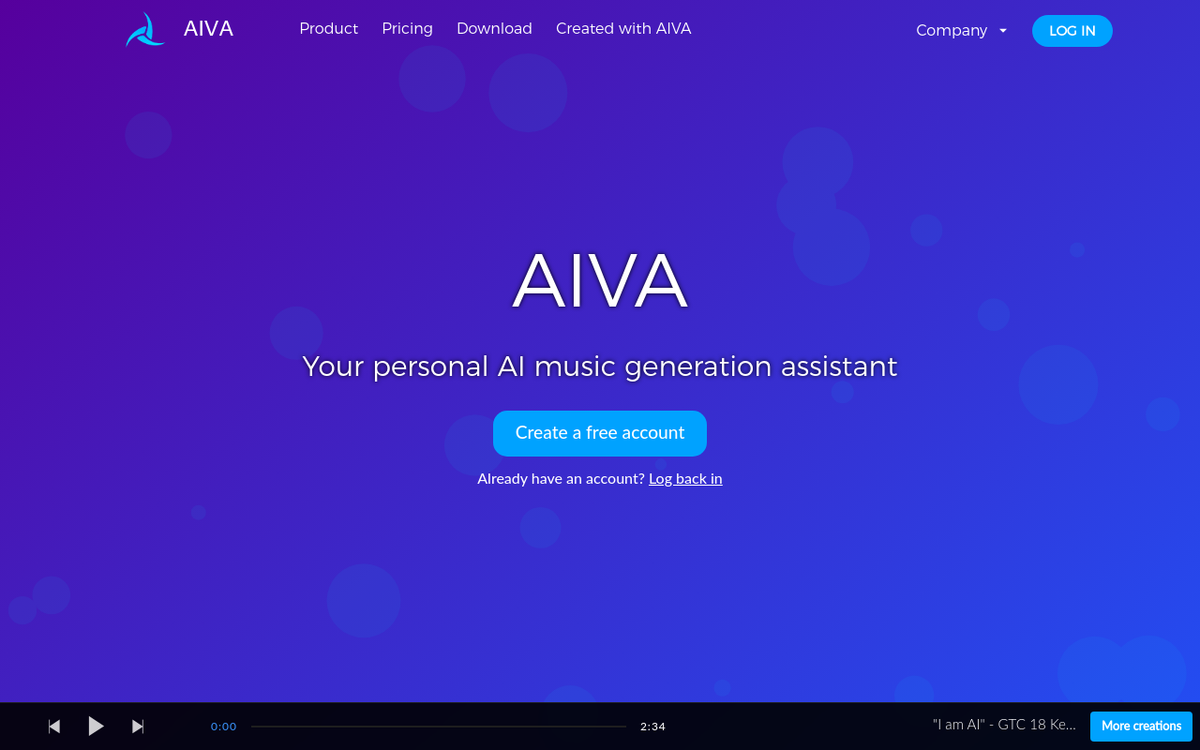
Verdict: If you need orchestral, cinematic, or ambient compositions, AIVA is the specialist tool. It is not trying to compete with Suno on pop or hip-hop.
AIVA was trained on over 20,000 classical music scores from composers like Bach, Mozart, Beethoven, and Vivaldi. That specialization shows. The orchestral and symphonic output is remarkably detailed, with proper instrument voicing and dynamic range that general-purpose generators cannot match.
What sets it apart:
You can edit compositions at the note level and export full MIDI files. That means you can take AIVA's output into a DAW and tweak every single note — something no other tool on this list offers at the same depth. It supports over 250 styles, from Electronic and Ambient to Sea Shanty and Tango.
Pricing:
The free plan gives you 3 downloads per month (up to 3 minutes, MP3 and MIDI, non-commercial use only). The Standard plan costs €15/month for 15 downloads, and the Pro plan costs €49/month for 300 downloads with full copyright ownership. Students and schools get up to 30% off.
Weaknesses:
AIVA is not the right tool for pop, hip-hop, R&B, or any genre that relies heavily on modern vocals. It is an instrumental composition tool first. If you need lyrics and singing, look elsewhere.
5. Boomy — Best for Beginners
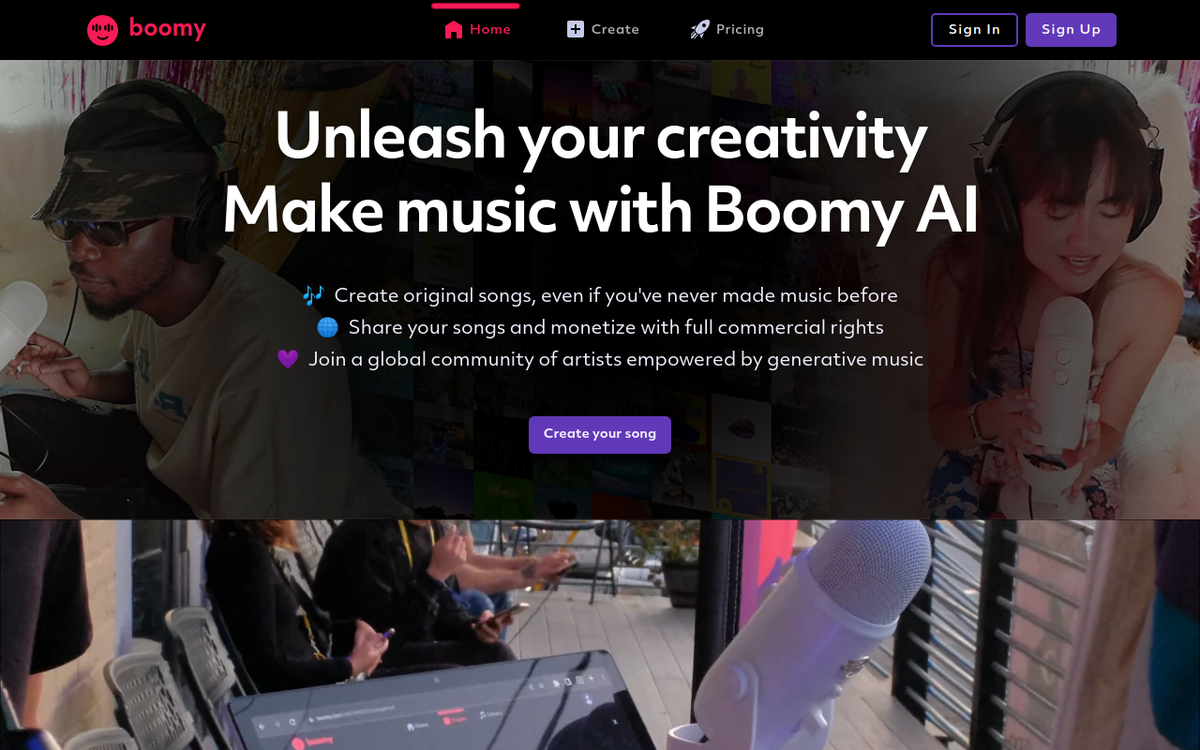
Verdict: The fastest path from zero to a finished track. Create a song in under 30 seconds and push it to Spotify the same day.
Boomy strips AI music generation down to its simplest form. You pick a style, make a few choices, and the platform generates a complete track almost instantly. Over 14.5 million songs have been created on the platform, which says something about its accessibility.
The distribution angle:
Boomy's real differentiator is its built-in distribution pipeline. You can push tracks directly to Spotify, Apple Music, TikTok, and 40+ other streaming platforms without leaving the app. You keep 80% of the streaming revenue. No other AI music generator makes the path from creation to distribution this seamless.
Pricing:
Free to use. The platform earns its revenue through a cut of streaming royalties rather than upfront subscriptions.
Weaknesses:
Audio quality is noticeably below Suno, Udio, and MusicWave.ai. Customization options are minimal — you are trading control for speed. There was also a 2023 incident where Spotify temporarily pulled thousands of Boomy tracks over artificial streaming concerns (later attributed to a third party, and the tracks were reinstated). The platform has moved past that, but it is worth knowing.
6. Loudly — Best for Content Creators
Verdict: Clean, licensable background music for videos, podcasts, and social media. Not for full song production, but excellent at what it does.
Loudly is built for content creators who need music that stays in the background without causing copyright strikes. The production quality is consistently clean, and everything generated on paid plans is pre-licensed for YouTube, TikTok, Twitch, and ads.
Features:
Text-to-music generation, stem exports for customization, and a built-in distribution pipeline to Spotify and Apple Music. The platform also offers an API for developers who want to integrate AI music generation into their own apps.
Pricing:
The free plan gives you 25 song creations per month, but tracks are limited to 30 seconds and you only get 1 download. The Personal plan costs $10/month ($8/month billed annually) and bumps you up to 300 creations, 3.5-minute tracks, and 300 downloads in MP3 and WAV. Higher tiers (Professional and Business) add more capacity and features.
Weaknesses:
The 30-second limit on the free plan makes it nearly useless for real testing. And while the production quality is clean, it rarely surprises you. Loudly plays it safe, which is great for background music but limiting if you want creative or experimental output.
7. Mubert — Best for Looping & Background Music
Verdict: The go-to tool for continuous, non-repetitive AI music streams. Perfect for podcasts, meditation apps, gaming, and ambient content.
Mubert takes a fundamentally different approach to AI music. Instead of generating discrete songs, it creates continuous streams of music based on mood, genre, or activity parameters. The output draws from millions of samples by real musicians, which gives it an organic texture that pure AI generation sometimes lacks.
What it does best:
Select a mood — Calm Meditation, Sports Extreme, Focus Deep, or dozens of others — and Mubert generates an infinite, non-repeating soundtrack. It can produce royalty-free instrumental tracks in under 10 seconds. The API lets you integrate this into apps, AI agents, games, and live streams, supporting over 200 moods and themes.
Pricing:
The free Ambassador plan gives you 25 tracks per month, but they come with an audible "Mubert" watermark. Paid plans remove the watermark and add commercial licensing.
Weaknesses:
Mubert is not a song creation tool. You will not get verses, choruses, lyrics, or vocal performances. If you need a complete track with structure, this is the wrong tool. It is purely functional music — excellent at its job, but narrow in scope.
8. Musicfy — Best for Voice Cloning
Verdict: The strongest voice cloning tool in the AI music space. If you want to create AI covers or build a custom vocal model, Musicfy is the specialist.
Musicfy's core strength is its voice engine. You can choose from over 100,000 existing voices or upload a 30 to 60 second vocal sample to clone your own. The cloning quality is remarkably good for pop, R&B, and singer-songwriter styles, capturing vocal timbre, tone, and stylistic tendencies with impressive accuracy.
Features beyond cloning:
The platform also offers text-to-music generation, voice-to-MIDI conversion (hum a melody and it converts to clean MIDI data), and a growing library of production tools. Over one million users are on the platform.
Pricing:
Plans start at $9/month with a free tier available. Free users cannot create clones. Starter users get a limited number of clone slots, and Studio users can create up to 30 custom voice profiles.
Weaknesses:
The text-to-music generation is decent but not class-leading — you are here for the voice features. The clone quality also drops off outside of pop and R&B styles. If you try to clone a voice for metal or opera, expect mixed results.
How to Choose the Right Suno Alternative
The right tool depends entirely on what you are trying to do. Here is a simple decision framework:
You want to create full songs with vocals and production: Go with MusicWave.ai (most features) or Udio (best instrumental quality). Both offer free tiers worth testing.
You need background music for content: Mubert for continuous streams and ambient soundscapes. Loudly for structured background tracks with clean licensing.
You are composing film scores or classical pieces: AIVA is the only real choice. Note-level editing and MIDI export make it a genuine composition tool.
You want to make personalized songs or gifts: MusicWave.ai has a dedicated personalized song gift feature that none of the others offer.
You just want the simplest possible experience: Boomy gets you from idea to published track faster than anything else.
You care about ethical sourcing and artist compensation: Soundverse is built from the ground up around licensed, artist-approved data.
You want to clone voices or make AI covers: Musicfy is the specialist here, with the deepest voice cloning toolkit.
Frequently Asked Questions
What is the best free alternative to Suno?
MusicWave.ai and Udio both offer competitive free tiers. MusicWave gives you 10 credits on signup with access to multiple tools beyond just song generation. Udio gives you 10 credits per day plus 100 monthly credits. If you only need background music, Mubert and Boomy are free as well, though with more limitations.
Is Udio better than Suno?
In some areas, yes. Udio tends to produce cleaner instrumental mixes and more natural vocal phrasing. Its UMG licensing deal also gives it stronger legal standing. However, Suno has a larger community, more features in its Studio suite, and faster generation times. The download disruptions during Udio's licensing transition were also a significant drawback. Neither is definitively better — it depends on what you prioritize.
Can I use AI-generated music commercially?
Yes, but only on paid plans for most platforms. Suno requires a Pro or Premier subscription. Udio requires Pro. MusicWave.ai, Loudly, and Musicfy grant commercial rights on their paid tiers. AIVA's Pro plan at €49/month includes full copyright ownership. Boomy's model is different — you can distribute for free but they take a 20% cut of streaming royalties. Always read the specific terms, especially around copyright ownership versus licensing.
What is the cheapest AI music generator?
Boomy is completely free if you are willing to share streaming royalties. For paid plans, Loudly starts at $8/month (annual billing), Musicfy at $9/month, and Udio at $10/month. AIVA and MusicWave.ai also have free tiers that let you test without paying anything.
Is there an AI music generator with no credit limits?
No mainstream AI music generator offers truly unlimited generation. Every platform uses some form of credit, download, or generation cap. The most generous free options are Udio (10 credits/day + 100/month) and Loudly (25 creations/month). On the paid side, AIVA's Pro plan at €49/month offers 300 downloads, and Suno's Premier plan gives 10,000 credits. If you hit limits frequently, MusicWave.ai's credit top-ups or Udio's Pro plan (6,000 credits/month) offer the best value for heavy users.
What happened to Suno's copyright lawsuit?
It is still ongoing — and getting more complicated. Warner Music settled with Suno in late 2025 and signed a licensing deal. But Sony Music's lawsuit is still active, with a potentially precedent-setting ruling expected in summer 2026. In Germany, GEMA's copyright infringement case against Suno is also moving through the courts, with a ruling expected around June 2026. Meanwhile, Suno tried to block Universal and Sony from accessing the details of its Warner settlement. The outcome of these cases could reshape the entire AI music industry, so this is worth watching closely if you use any AI music tool commercially.